
How to Prepare a Trading Plan for High-Impact Fed Events
How to Prepare a Trading Plan for High-Impact Fed Events
Why? Jackson Hole is a week away.
The 2026 Economic Policy Symposium runs August 27-29 at the Jackson Lake Lodge in Wyoming. Fed Chair Powell takes the podium Friday morning. Roughly 120 central bankers, policymakers, and economists from more than 70 countries will be in the room. Every currency pair, every bond market, every equity index will be hanging on the tone, the word choice, the pauses between sentences.
And most retail traders will show up that morning with no plan at all.
They'll have a chart open. They'll have a vague sense that "volatility is coming." They'll watch the initial spike, feel the FOMO, and enter somewhere in the chaos — usually at the worst possible price, in the wrong direction, with no defined risk. Then they'll spend the weekend wondering what happened.
Professional traders don't trade Jackson Hole. They trade the plan they built before Jackson Hole.
The distinction is everything.
You want to prepare a trading plan for high-impact Fed events - not a generic "manage your risk" reminder, but a specific, actionable framework you can execute when Powell steps to the microphone next Friday.
Why Jackson Hole Hits Different
Jackson Hole isn't just another Fed speech. The symposium sits between scheduled FOMC meetings, making the Chair's remarks one of the few opportunities for explicit policy guidance outside of formal press conferences. The speech is typically more candid in tone than meeting statements. The audience is central bankers and economists, not journalists. The words carry weight.
The track record speaks for itself:
- 2022: Powell warned that restoring price stability would "bring some pain to households and businesses." The S&P 500 dropped more than 3% on the day. The Dow, Nasdaq, and bond markets all convulsed.
- 2025: Powell acknowledged rising labor market risks and signaled policy adjustments might be warranted. The S&P 500 rallied 1.5%. The Dow and Nasdaq each gained close to 2%. The 2-year Treasury yield fell 10 basis points in a single session.
- 2026 setup: The theme is "Financial Innovation: Implications for Payments and Policy," but the market's real focus will be on any signal about the September rate decision. With tariff-driven inflation still a live issue and labor market data softening, Powell is walking a tightrope between hawks who want patience and doves who see a widening pivot window. The speech could compress or expand the September easing probability in minutes.
This is not an event you trade reactively. This is an event you prepare for like a professional — with a plan that was written before the adrenaline hits.
How to Prepare a Trading Plan for High-Impact Fed Events - the Planning Phase
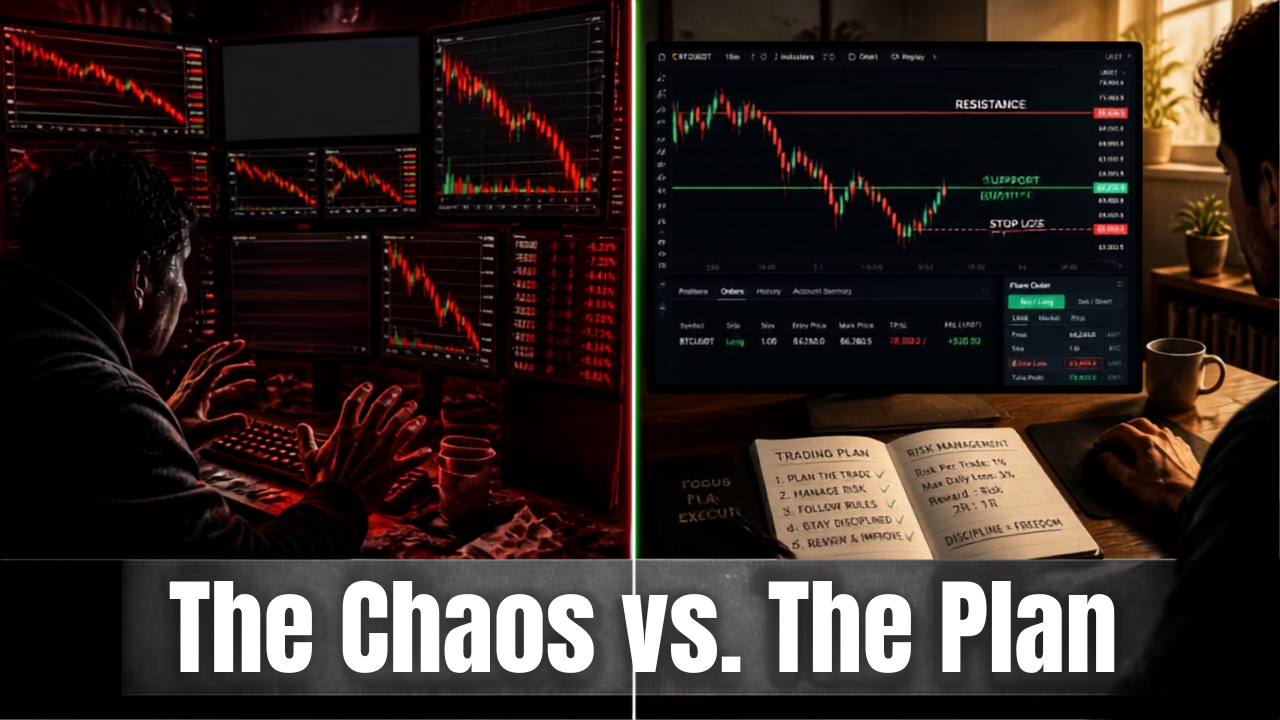
A trading plan for a high-impact Fed event needs to answer five questions before the event begins. If you can't answer all five, you're not ready to trade.
1. What Is My Exposure Right Now?
The planning starts days before the speech, not minutes before.
Markets often price in expectations ahead of Jackson Hole. If traders broadly expect a dovish signal, you'll see USD weakness and equity strength in the days leading up. If expectations lean hawkish, the opposite. This pre-positioning creates two risks:
- You're already exposed to a reversal if the speech underdelivers relative to expectations. A "dovish" speech that was already priced in can still produce a sell-off if the market wanted more.
- You're holding positions that will gap through stops if the speech surprises. A swing trade in EUR/USD that's been working all week can get erased in 90 seconds of post-speech volatility.
The first decision in your Jackson Hole plan isn't about what you'll trade on Friday. It's about what you're holding right now. Go through every open position and ask: Does this trade need to survive a 2-standard-deviation move in 15 minutes? If the answer is no, close it or reduce it before Friday morning.
Action item: By Wednesday or Thursday at the latest, reduce net exposure across all positions that are sensitive to USD, rates, or broad risk sentiment. You don't have to go flat. But you should go small enough that a worst-case spike doesn't cause damage you can't recover from.
2. What Am I Actually Trading?
The speech itself will produce sharp, chaotic moves across every major asset class. You cannot trade all of them. You need to pick your battlefield in advance.
The cleanest event-driven moves typically come from:
- USD pairs: EUR/USD, GBP/USD, USD/JPY. The dollar is the direct transmission mechanism for Fed policy signals. A dovish Powell weakens the dollar. A hawkish Powell strengthens it. These pairs will move first and move fastest.
- Bond yields: The 2-year Treasury yield is particularly sensitive to rate expectations. Watch it as a leading indicator — yields will often signal the market's interpretation before equity indices catch up.
- Equity indices: S&P 500, Nasdaq. Growth and tech names are most sensitive to rate expectations. A dovish signal lifts them. A hawkish signal hammers them.
- Gold: Moves on real yield expectations and dollar direction. A dovish signal that pushes real yields lower is bullish for gold. A hawkish signal that strengthens the dollar is bearish.
Pick one or two instruments maximum. Not five. Not "whatever looks good in the moment." The plan specifies exactly what you're watching and exactly what you're trading. Everything else is noise — and noise is expensive during high-volatility events.
Action item: Write down the one or two instruments you'll focus on. Write down the key technical levels on each — support, resistance, recent ranges. Have those levels visible on your screen before the speech starts. You won't have time to draw them once price is moving.
3. Am I Trading the Speech or the Reaction?
This is the most important strategic decision in your plan, and most traders never make it consciously.
Trading the speech means you're trying to capture the initial spike — the first 5-15 minutes of chaos when price is gapping, spreads are wide, and direction can reverse multiple times before settling. This is scalping territory. It requires small size, wide stops, and the emotional discipline to accept that you'll get faked out more often than not. Even professionals struggle with this.
Trading the reaction means you're waiting for the market to digest the speech, establish a direction, and produce a tradeable setup — typically 30-90 minutes after the initial release.
This is the higher-probability approach for most traders. You're not trying to be first. You're trying to be right.
The plan needs to specify which approach you're taking before the event. If you're trading the speech, you need a scalping framework: tight entries, defined risk, acceptance of noise. If you're trading the reaction, you need patience: a clear definition of what "confirmation" looks like, and the discipline to sit on your hands while the initial spike plays out.
Action item: Write down: "I am trading the [speech / reaction]." If you're trading the reaction, define your confirmation criteria. Example: "I will enter only after a 15-minute close above/below the pre-speech range on the 5-minute chart, with volume confirmation."
4. Where Is My Risk Defined?
During a high-impact Fed event, your normal risk parameters may not apply. Spreads widen. Slippage increases. Liquidity thins for brief windows. A stop that would normally cost you 10 pips can cost you 25 or 30.
Your plan needs to account for this:
- Position size should be smaller than usual. If you normally risk 1% per trade, consider 0.5% or 0.25% for event trades. The volatility is higher, which means the opportunity is larger even with reduced size — but the risk of catastrophic slippage is also higher.
- Hard stops are non-negotiable. Mental stops during a Fed speech are a fantasy. If you're wrong, you need the platform to get you out — not your hope that price will come back.
- Accept that your stop may slip. If your plan requires a 10-pip stop to work, and the event environment is producing 15-pip slippage on average, your plan doesn't work in this environment. Either widen the stop and reduce size proportionally, or don't trade.
For a deeper framework on how professional traders approach risk during volatile events, our piece on how professional traders manage risk walks through the principles that separate genuine risk management from checkbox compliance.
Action item: Write down your maximum dollar risk for the event. Not a percentage. A dollar amount. "I am willing to lose $X on Jackson Hole trades. No more." This number should be small enough that losing it doesn't affect your emotional state or your ability to trade next week.
5. What Is My "Do Not Trade" Rule?
Every plan needs a circuit breaker. For a Fed event, the circuit breaker is especially important because the initial minutes can produce moves that look like opportunities but are actually traps.
Define in advance what would cause you to stand down entirely:
- Technical levels breaking in conflicting directions: If EUR/USD spikes up 50 pips, then reverses 60 pips, then spikes again — the market hasn't made up its mind. Trading into that chaos is gambling.
- Spreads widening beyond your threshold: If the bid-ask spread on your instrument is 5x normal, you're paying an enormous entry cost before the trade even has a chance to work.
- Cross-asset divergence: If equities are rallying but bond yields are also rising — the market is confused. Confused markets produce random price action. Wait for coherence.
Action item: Write down your "stand down" criteria. If any of them trigger, you close the laptop and walk away. The market will still be there on Monday. Your capital may not be if you trade through conditions your plan explicitly told you to avoid.
The Pre-Event Checklist: Day by Day
Here's a day-by-day timeline for the week leading into Jackson Hole:
Monday-Tuesday (August 24-25): Reduce and Review
- Close or reduce any positions with significant USD or rate sensitivity.
- Review the economic calendar for any other high-impact events that week that could complicate the Jackson Hole setup.
- Start tracking market narratives: what is the consensus expectation for Powell's tone? What would constitute a surprise?
Wednesday (August 26): Finalize the Plan
- Write down the five answers above. Physically. On paper.
- Mark up your charts with key technical levels.
- Set alerts at those levels so you're not staring at screens all morning Friday.
- Decide whether you're trading the speech or the reaction.
Thursday (August 27): Symposium Begins
- The symposium opens, but the keynote is Friday. Thursday may produce positioning moves as latecomers adjust.
- Review your plan one more time. Make any adjustments based on Thursday's price action.
- Go to bed early. Trading a Fed event on poor sleep is asking for impulsive decisions.
Friday Morning (August 28): Execute the Plan
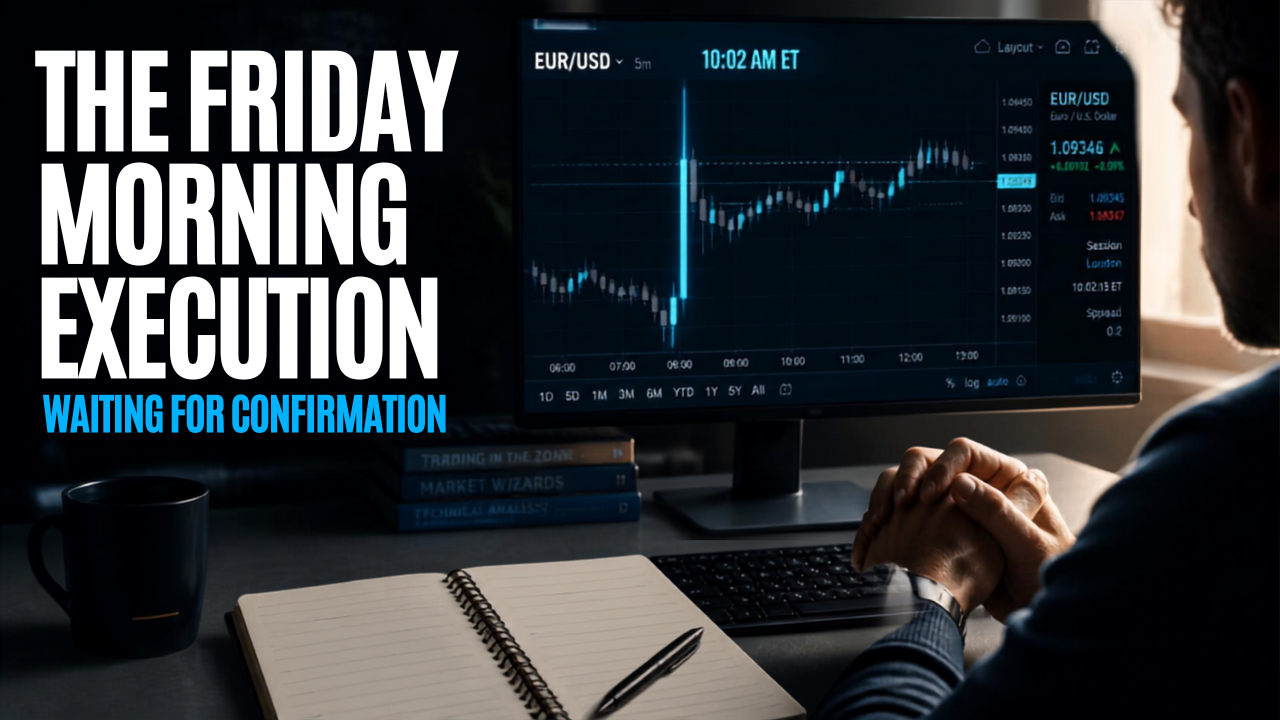
- Wake up early. Review your plan. Do not change it based on pre-market jitters.
- If you're trading the reaction, let the initial spike play out. Do not watch every tick. Do not "just take a small position" because it's moving.
- If your stand-down criteria trigger, stand down. No negotiation. No "but this time it's different."
- After the event, regardless of outcome, close the platform and walk away. The post-mortem happens Saturday, not Friday afternoon.
What Professionals Know That Amateurs Don't
The single biggest difference between professional and amateur traders during high-impact events isn't strategy. It's not analysis. It's not even discipline — though that's part of it.
It's specificity.
Amateurs show up with a vague intention: "I'll see what happens and trade the direction." Professionals show up with a written plan that specifies exactly what they're trading, exactly where their entries and exits are, exactly how much they're risking, and exactly what would cause them to stand down.
The plan doesn't guarantee profits. No plan does. But it guarantees that your decisions were made by a calm, rational version of yourself — not by the version that's watching a 60-pip spike with adrenaline flooding your system and FOMO screaming in your ear.
The time to make decisions about Friday is now. Not when Powell is at the podium. Not when price is ripping through your levels. Now. While the market is quiet. While your brain is clear. While you still have access to the rational, planning part of your mind that will partially go offline the moment volatility hits.
Write the plan. Follow the plan. Review the plan. That's the work. The trading is just the execution.
If you're ready to develop the kind of structured, process-driven approach that professional traders rely on — including during high-impact events like Jackson Hole — find out what a real trading career looks like at Maverick Trading, where profit-sharing, real capital, and professional development have been the model since 1997.
Disclaimer: This content is for informational and educational purposes only. It does not constitute financial advice. Trading foreign exchange, equities, options, futures, and other financial instruments involves substantial risk of loss and is not suitable for every investor. Past performance is not indicative of future results. Always consult with a qualified financial professional before making any trading decisions.