
Loss Aversion in Trading: The Psychology Bias That Costs More Than Bad Trades
Every trader experiences losing trades. The difference between successful traders and struggling traders isn't avoiding losses, it's understanding the psychology of loss aversion.
Many retail traders believe their biggest challenge is finding a better strategy. One of the greatest obstacles to consistent profitability is psychology. More specifically, it's loss aversion.
Loss aversion is the tendency to feel the pain of a loss much more intensely than the satisfaction of an equivalent gain. Research has consistently shown that losses feel roughly twice as powerful emotionally as comparable profits.
This psychological bias quietly influences nearly every trading decision. It causes traders to hold losing positions too long, exit winning trades too early, ignore trading plans, and take unnecessary risks after a loss.
Professional traders understand that losses are part of the business. Rather than trying to eliminate them, they build systems that prevent emotions from taking control.

What Is Loss Aversion?
Loss aversion is a behavioral finance concept describing our natural tendency to avoid losses, even when doing so produces worse long-term outcomes.
Imagine two scenarios:
- You gain $500.
- You lose $500.
Although the dollar amount is identical, the emotional impact is not. Most people report the loss feels significantly more painful than the gain feels rewarding.
In trading, this imbalance creates dangerous behavior.
Instead of objectively evaluating new information, traders begin making decisions based on emotional discomfort. The goal shifts from following a proven process to simply avoiding the feeling of taking a loss.
That subtle shift can completely change the outcome of a trading career.
How Loss Aversion Appears in Trading
Most traders don't realize loss aversion is influencing them. It often disguises itself as patience, confidence, or optimism.
Some of the most common examples include:
Holding Losing Trades Too Long
Perhaps the most recognizable symptom is refusing to exit when a stop-loss is reached.
Instead of accepting a predefined loss, traders begin saying things like:
- "It'll come back."
- "I'll give it one more day."
- "It's only a paper loss."
The original trading plan disappears as emotions take over.
Unfortunately, small losses frequently become much larger losses.
Professional traders know that protecting capital matters more than protecting pride.
Selling Winners Too Early
Loss aversion doesn't only affect losing trades.
It also causes traders to close profitable positions prematurely.
Why?
Because once a trade shows a profit, many traders become afraid of losing those gains. Rather than allowing their edge to play out, they lock in small profits before reaching their planned target.
The result is a trading record filled with:
- Small winners
- Large losers
Even with a respectable win rate, that combination is difficult to overcome.
Moving Stop-Loss Orders
Many traders establish stop-loss levels before entering a position.
Then the market approaches that level.
Instead of accepting the loss, they move the stop farther away.
At that point, the stop-loss is no longer managing risk. It has become an emotional comfort mechanism.
Professional traders understand that stop-losses only work if they are respected.
For more on building disciplined decision-making, read Understanding Market Psychology:
Revenge Trading
Loss aversion often leads directly into revenge trading.
After taking a loss, traders feel an overwhelming urge to "get their money back."
Instead of waiting for quality setups, they:
- Increase position size
- Trade lower-quality setups
- Ignore entry rules
- Force opportunities
Ironically, the desire to erase one loss often creates several more.
The market has no memory of previous trades.
Every trade should be evaluated independently.
Why Professionals Think Differently
Professional traders don't enjoy losing.
They simply understand that losses are operating expenses.
Every business has costs.
Restaurants buy food.
Manufacturers purchase materials.
Professional traders accept that small losses are the cost of finding larger opportunities.
Because they expect losses, they don't attach personal meaning to them.
Instead, they focus on executing their process consistently over hundreds of trades.
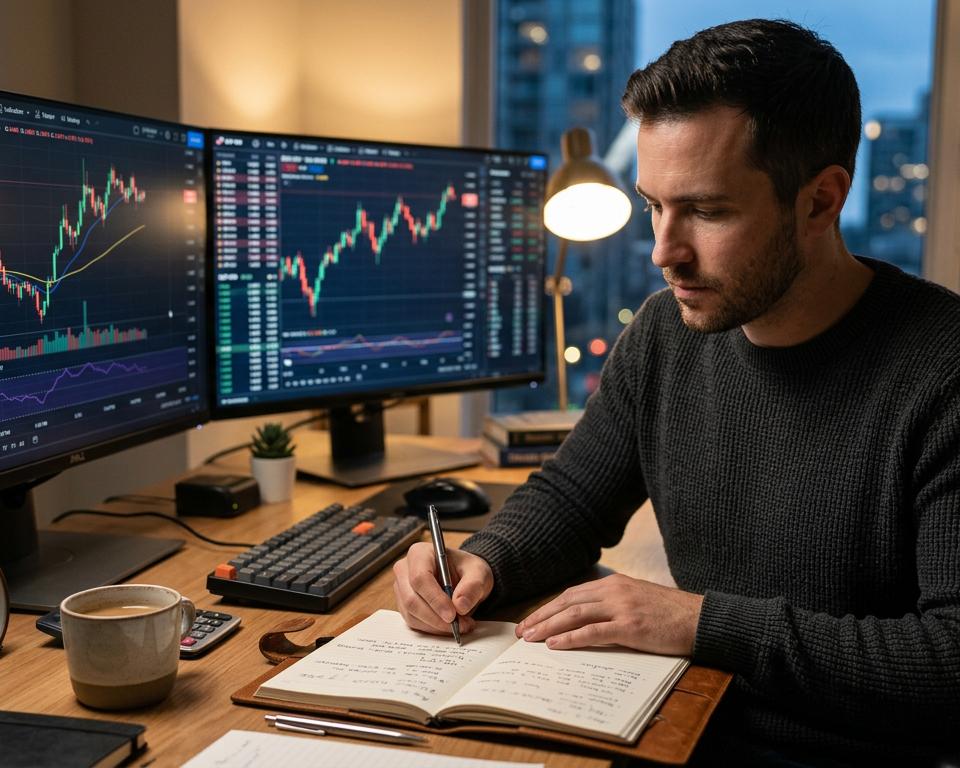
The Importance of Risk Management
Loss aversion becomes much less powerful when risk is controlled before entering a trade.
Professionals define:
- Maximum dollar risk
- Position size
- Exit levels
- Profit targets
before clicking the Buy or Sell button.
Once the trade begins, the decision-making has already been completed.
This removes much of the emotional pressure that causes impulsive behavior.
Learn more about building professional risk management habits in How Professional Traders Manage Risk:
https://www.mavericktrading.com/free-trading-videos/articles/how-professional-traders-manage-risk/
Emotional Control Is a Skill
Many new traders believe emotional control is a personality trait.
It isn't.
It's a skill developed through repetition, preparation, and structured decision-making.
Professional traders reduce emotional reactions by:
- Following written trading plans
- Using consistent position sizing
- Accepting predefined losses
- Reviewing trades objectively
- Measuring long-term performance instead of individual outcomes
The goal isn't eliminating emotion.
The goal is preventing emotions from making trading decisions.
For additional strategies on maintaining discipline, read Emotional Control in Trading:
https://www.mavericktrading.com/free-trading-videos/articles/emotional-control-in-trading
How to Reduce Loss Aversion
Every trader experiences this psychological bias, but its influence can be minimized.
Consider these practical habits:
1. Accept That Losing Is Part of Trading
No strategy wins every trade.
Once losses become expected rather than feared, emotional reactions decrease significantly.
2. Risk Small Amounts
Oversized positions magnify emotional pressure.
Smaller risk allows traders to make objective decisions.
3. Follow Written Rules
When rules are documented before entering a trade, there is less room for emotional decision-making afterward.
4. Judge Execution, Not Outcome
A good trade can lose.
A bad trade can win.
Professionals evaluate whether they followed their process, not whether the latest trade made money.
5. Think in Series of Trades
Professional trading is a long-term probability game.
One trade means very little.
One hundred trades reveal whether an edge actually exists.
Building a Professional Trading Mindset
Overcoming loss aversion isn't about becoming fearless.
It's about becoming disciplined.
Successful traders understand that preserving capital creates future opportunities.
They don't chase losses.
They don't refuse to admit mistakes.
They don't let temporary emotions override proven systems.
Instead, they trust their process and allow probabilities to work overtime.
That mindset is often what separates long-term professionals from traders who continually struggle with emotional decision-making.
Why Loss Aversion Matters
Loss aversion is one of the most expensive psychological biases in trading because it quietly changes behavior without most traders realizing it.
It encourages traders to avoid small losses while creating much larger ones. It also causes profitable trades to be cut short before they have time to develop.
Professional traders overcome this bias by accepting losses as part of the business, managing risk before entering trades, and following disciplined processes rather than emotional impulses.
For traders serious about building long-term consistency, developing the right mindset is just as important as developing technical skills. Many who are committed to making trading a career eventually explore what it looks like to trade with firm backing, where disciplined risk management and professional processes are central to long-term success.