
Why Small Losses Lead to Long-Term Gains
Every trader dreams of finding the perfect strategy that rarely loses. While profitable trading systems do exist, no strategy wins all the time. The difference between successful traders and struggling traders isn't the absence of losses, it’s how to manage them into small losses.
Professional traders understand that taking small losses is not a sign of failure. It's a necessary cost of doing business. In fact, accepting small losses consistently is one of the most important habits that separates long-term winners from traders who eventually blow up their accounts.
Understanding the importance of small losses in trading can completely change the way you approach the markets.
"The difference between successful traders and struggling traders isn't the absence of losses, it’s how to manage them into small losses."
Why Traders Fear Taking Losses
Most people enter trading with the belief that losing is bad.
That mindset makes sense in everyday life. We try to avoid mistakes because mistakes often have negative consequences.
Trading is different.
Losses are inevitable.
Unfortunately, many retail traders refuse to accept this reality. Instead of exiting a losing trade according to plan, they begin making emotional decisions.
They move stop losses.
They average down.
They hope the market comes back.
Often, a manageable loss turns into a devastating one.
The issue isn't the original trade idea.
It's the inability to accept a planned loss.
Small Losses Protect Trading Capital
Capital is every trader's most valuable asset.
Without capital, there are no future opportunities.
Professional traders focus first on protecting their accounts rather than maximizing every potential gain.
Comparing Two Approaches to Risk
Consider two traders.
Trader A loses 1% on ten consecutive trades.
Trader B refuses to exit losing positions and eventually loses 25% on one trade.
Trader A remains financially and emotionally capable of continuing.
Trader B now needs a gain of more than 33% simply to recover.
This illustrates why preserving capital always comes before pursuing profits.
"This illustrates why preserving capital always comes before pursuing profits."
Losses Are Business Expenses
Every successful business has operating costs.
Restaurants pay rent.
Manufacturers purchase materials.
Retail stores maintain inventory.
Trading has operating expenses too.
Those expenses are called losses.
Professional traders don't celebrate losing money, but they recognize that controlled losses are part of producing long-term profits.
The goal is not to eliminate losses.
The goal is to keep them predictable and manageable.
The Mathematics of Recovery
Large losses become increasingly difficult to recover from.
Consider the difference: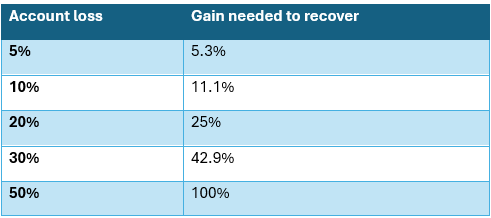
The larger the drawdown, the harder it becomes to return to breakeven.
Professional traders understand this simple math and build their risk management around avoiding large drawdowns.
Small losses make long-term growth much more achievable.
Stop Losses Exist for a Reason
Many traders place stop losses only to move or remove them once the market moves against them.
This completely defeats their purpose.
A stop loss is designed to define risk before entering a trade.
Moving it because of hope introduces emotion into the decision-making process.
If you're interested in learning more about this common mistake, read our article on Misuse of Stops in Trading:
https://mavericktrading.com/free-trading-videos/articles/misuse-of-stops-in-trading/
Winning Less Can Still Mean Making More
One of the biggest misconceptions in trading is believing that a high win rate guarantees profitability.
It doesn't.
A trader who wins 80% of the time but occasionally experiences massive losses may underperform someone who wins only 50% of the time while maintaining excellent risk management.
Professional traders focus on expectancy.
They evaluate whether average winners consistently outweigh average losers.
This perspective produces more stable long-term performance than chasing a high win percentage.
Learn more in our article:
Win Rate vs Risk Management
Emotional Discipline Separates Professionals
Taking a planned loss requires emotional discipline.
It means admitting the market didn't validate your trade idea.
Many traders struggle with this because they attach their identity to every trade.
Professionals think differently.
They know every trade represents only one outcome within a much larger sample size.
Individual trades matter very little.
Consistent execution matters enormously.
This mindset makes accepting losses much easier.
Risk Management Is the Real Edge
Many retail traders spend years searching for the perfect indicator.
Professional traders spend just as much time refining their risk management process.
They know even excellent strategies experience losing streaks.
The difference is that disciplined risk management prevents temporary setbacks from becoming permanent damage.
For a deeper look at professional risk management principles, read:
Structured Trading Encourages Better Decisions
One advantage professional trading firms provide is accountability.
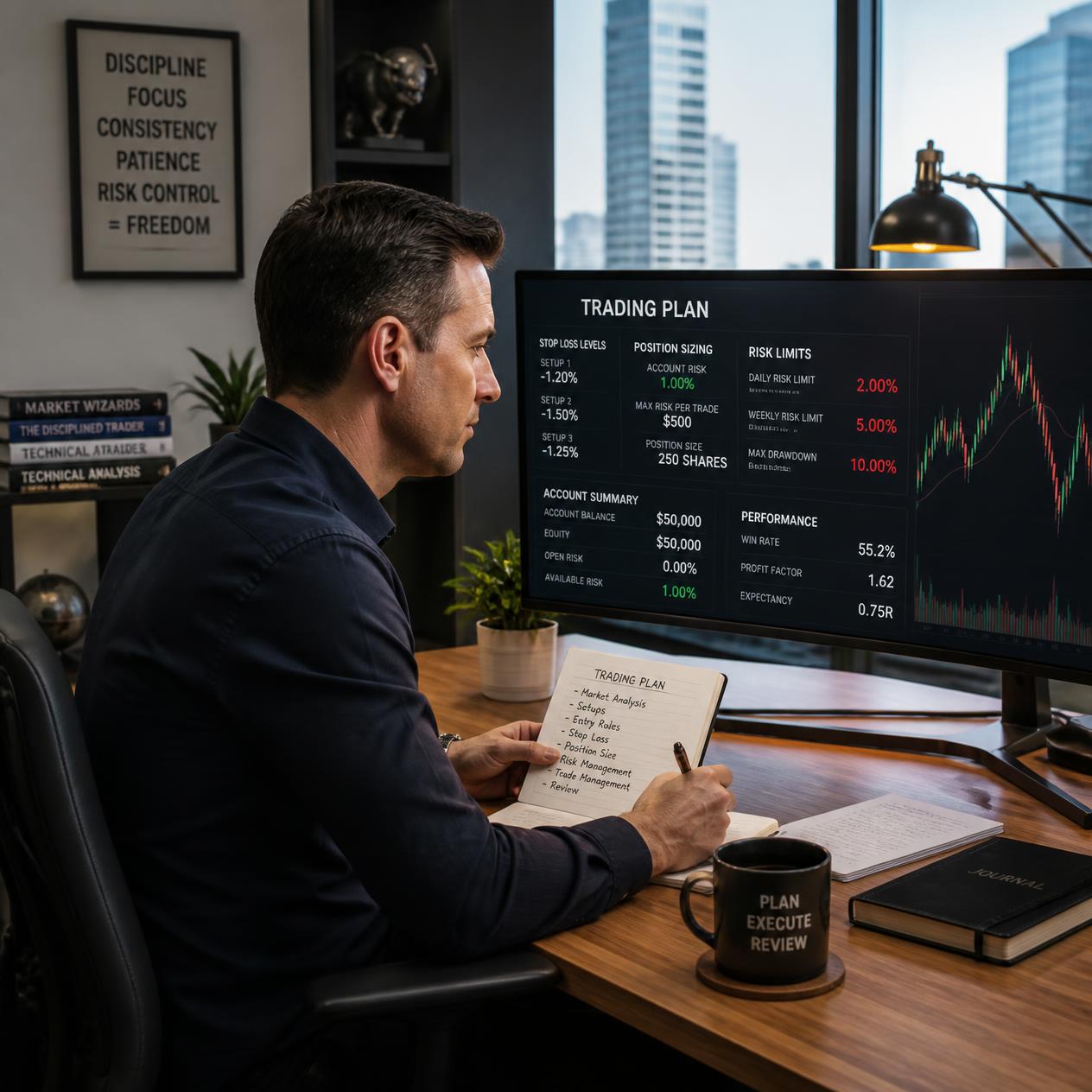
Risk limits are clearly established.
Maximum losses are defined before trading begins.
Position sizing follows predetermined guidelines.
This reduces the temptation to make emotional decisions during market volatility.
This is where trading within a structured trading environment can start to make a difference over time.
Rather than relying solely on willpower, traders operate within a framework designed to promote consistency and capital preservation.
Think in Hundreds of Trades
One losing trade means very little.
One hundred properly managed trades reveal whether a trading system truly has an edge.
Professional traders evaluate results over long periods.
Retail traders often judge themselves after every individual trade.
This creates emotional highs and lows that interfere with objective decision making.
Viewing trading as a long-term probability game makes accepting small losses much easier.
Long-Term Success Comes From Staying in the Game
The markets will always provide another opportunity.
The traders who survive long enough to capitalize on those opportunities are the ones who consistently protect their capital.
Accepting small losses doesn't make you a poor trader.
It makes you a disciplined one.
"Accepting small losses doesn't make you a poor trader. It makes you a disciplined one."
Successful trading isn't about avoiding losses altogether.
It's about avoiding losses that permanently damage your account.
The importance of small losses in trading cannot be overstated.
Every professional trader experiences losing trades.
What separates them from struggling traders is their willingness to accept those losses quickly, preserve capital, and move on to the next opportunity.
Small losses are not setbacks.
They're investments in long-term consistency.
By protecting your account, managing risk objectively, and following a disciplined trading process, you give yourself the opportunity to benefit from the probabilities that play out over hundreds of trades.
When combined with sound education, proper risk management, and a structured trading environment, these habits can help traders build the consistency needed for long-term success.